RV water damage, soft floors and mold
In Florida, water reaches an RV two ways: through the roof and walls in a downpour, and straight out of the air on a muggy day. Around Tampa, searches for RV dehumidifiers stay steady all year and peak in July and August.
The tech comes to the RV — a campsite, your driveway or a storage lot.
Is your RV too damp? Check the humidity
Put a hygrometer — a few dollars at any hardware store — on a shelf away from the stove and shower. Leave it for an hour with the doors closed, then enter the reading.
The EPA advises keeping indoor humidity below 60%, ideally between 30 and 50%, and drying anything wet within 24 to 48 hours to stop mold.
Source: U.S. EPA, “A Brief Guide to Mold, Moisture, and Your Home”, current edition.
Signs of water damage
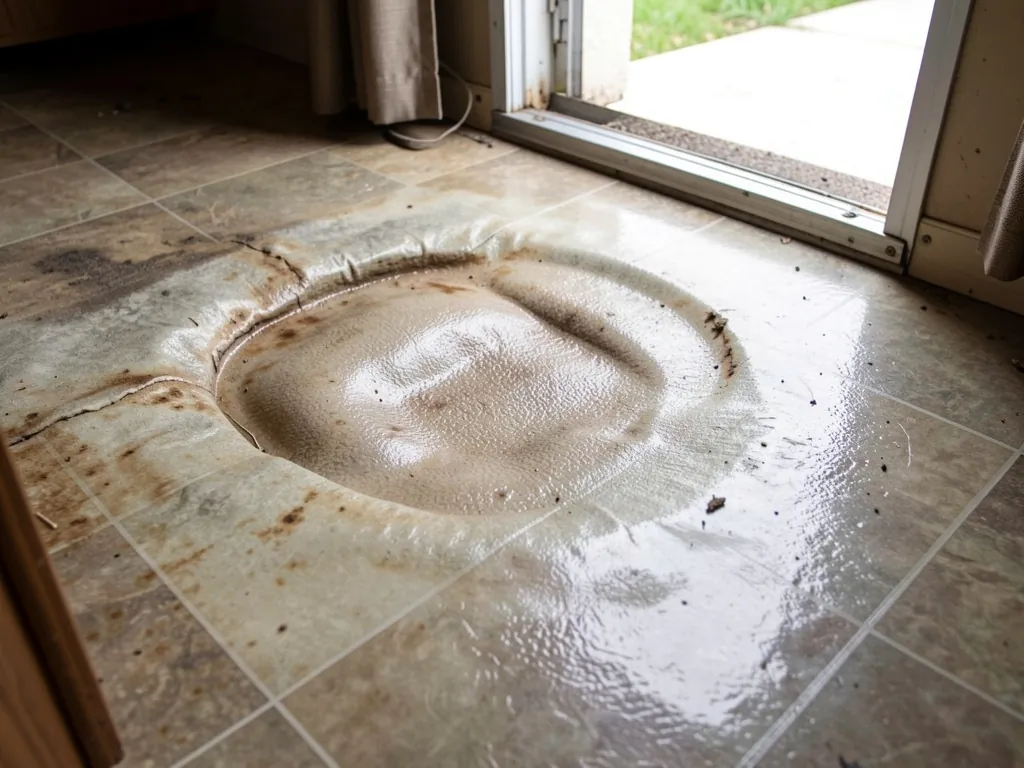
- Soft spots in the floor
The floor gives under your foot near a door, the bathroom or a slide. Usually water from the roof or a wall has run down into the subfloor.
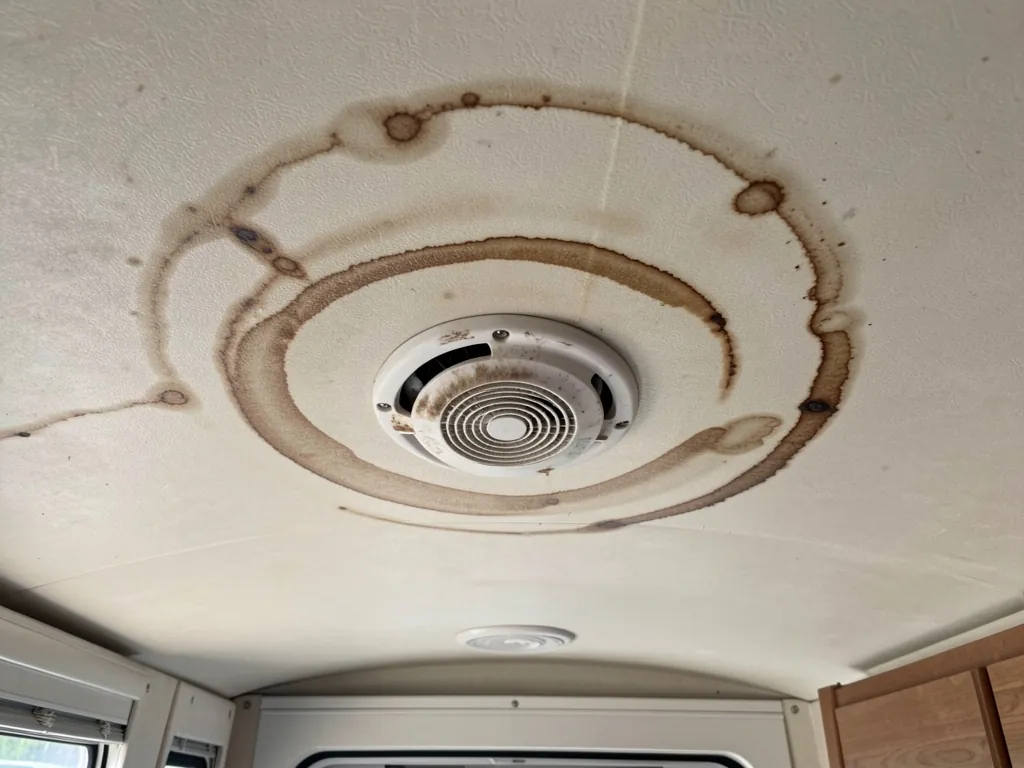
- Stains on the ceiling or walls
Brown rings or tide lines around vents, windows and corners.
- Bubbles in the outside wall
Delamination: the fiberglass skin separates from the wall behind it. By the time it shows, water has usually been getting in for months.
- Musty smell or visible mold
Damp air and wet materials. Mold grows on cabinets, under mattresses and behind curtains.
What to do right away
- Stop the waterFind where it comes in if you can, and cover the spot or keep the RV out of the rain until it's fixed.
- Dry it outRun the AC or a dehumidifier, use fans and get wet cushions and rugs out into the sun.
- Mark the damagePhotograph stains and soft spots and note their size. It helps the tech and any insurance claim.
- Keep the RV closed in rainOpen windows on a sunny, dry day to air it out, not during storms.
What the technician does
The tech traces the leak — roof, window, slide seal, plumbing or a storage bay — and maps the wet area with a moisture meter, which finds damp wood that looks dry.
Then they seal the source and repair what got wet: decking, a section of subfloor, wall panels. Source first — a new floor under an unfixed leak rots again by the next rainy season.
What it costs
| Repair | Typical range | Source |
|---|---|---|
| Leak repair, including structural | $200–2,000+ | Camping World, “RV Roof Repair Cost Guide”, October 2026 |
| Technician's hourly rate | $140–200 | Micro-Air, “How much does it cost to replace an RV AC unit”, June 2026; Camping World, “RV Furnace Repair Cost Guide”, October 2026 — labor rates stated in both |
2026 ranges for planning, not a quote. Your tech names the real price after seeing the RV.
Water that has spread into floors and walls can push the cost well past that range — one more reason to act within days, not weeks.
Prices checked November 2026.
Water damage questions
Is a soft floor worth fixing?
Often yes, if the leak is stopped and the frame is sound. The tech can tell you how far the damage goes before you decide.
What dehumidifier size do I need in an RV?
A small compressor dehumidifier is enough for most RVs. Watch the hygrometer: if it stays above 60%, you need more drying.
Does insurance cover RV water damage?
Sudden damage, like a branch through the roof, often is; slow leaks often aren't. Read your policy and call your insurer before repairs begin.
Send a repair request
A phone number is enough — whichever tech accepts will ring you back.