RV air conditioner repair in Tampa Bay
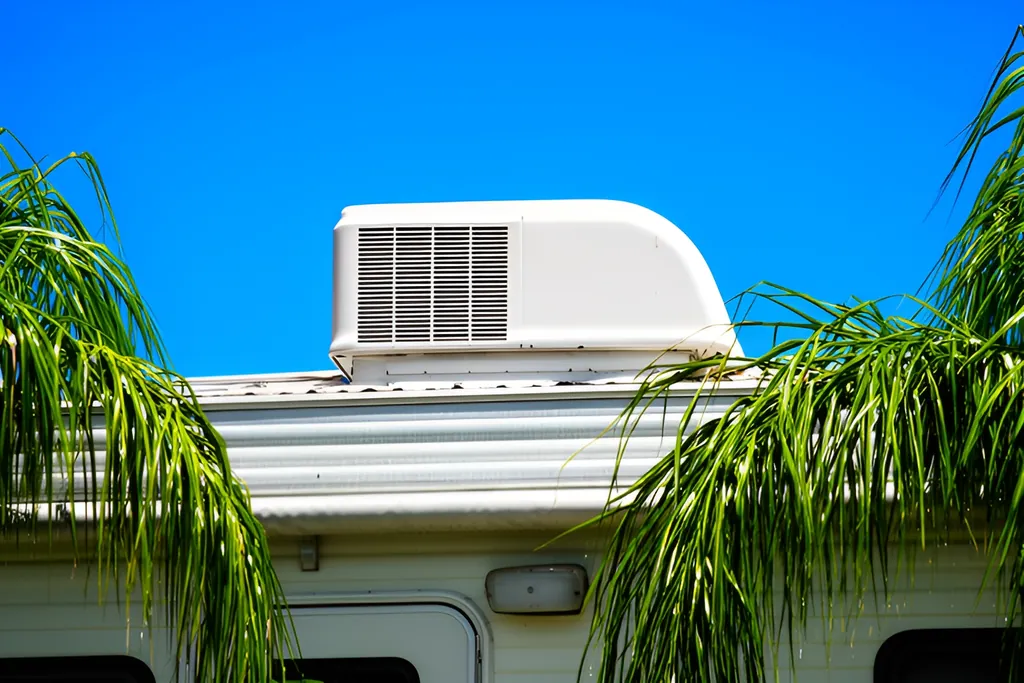
Here the rooftop AC fights two things at once: heat and water in the air. Around Tampa, people start looking for AC help in March, and the busiest stretch runs from May through July.
The tech comes to the RV — a campsite, your driveway or a storage lot.
What owners notice
- Air from the vents isn't cold
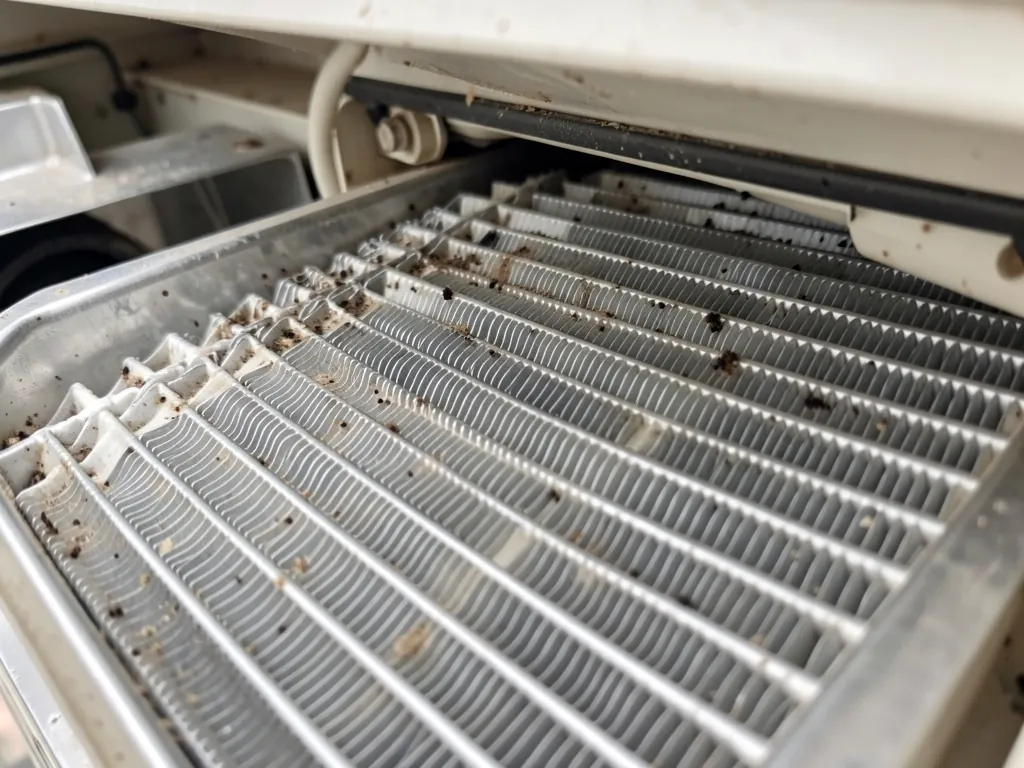
The fan blows, but the air feels like the room. Usual suspects: a tired capacitor, a compressor stuck at start-up, or coils matted with dust and pollen.
- Water dripping from the ceiling unit
In humid air the AC pulls out a lot of water. When the drain pan clogs or the gasket between unit and roof flattens, it comes inside.
- Sticky air even when it's cool
The thermostat says 74°, but everything feels damp. Often a dirty coil or a fan on High in very humid weather — the air moves too fast over the coil to give up its water.
- Ice on the vents or the coil
Frost forms when too little air reaches the coil — think clogged filter or a slow fan setting — and now and then it's a refrigerant fault.
- Compressor starts and quits
You hear it kick on, then stop within seconds. Sagging park voltage on a busy summer evening, a failing capacitor or a compressor running too hot.
- Musty smell when it starts
Mold growing on a coil or in a drain pan that stays wet. It usually means the unit needs a clean, not replacing.
Quick checks before you call
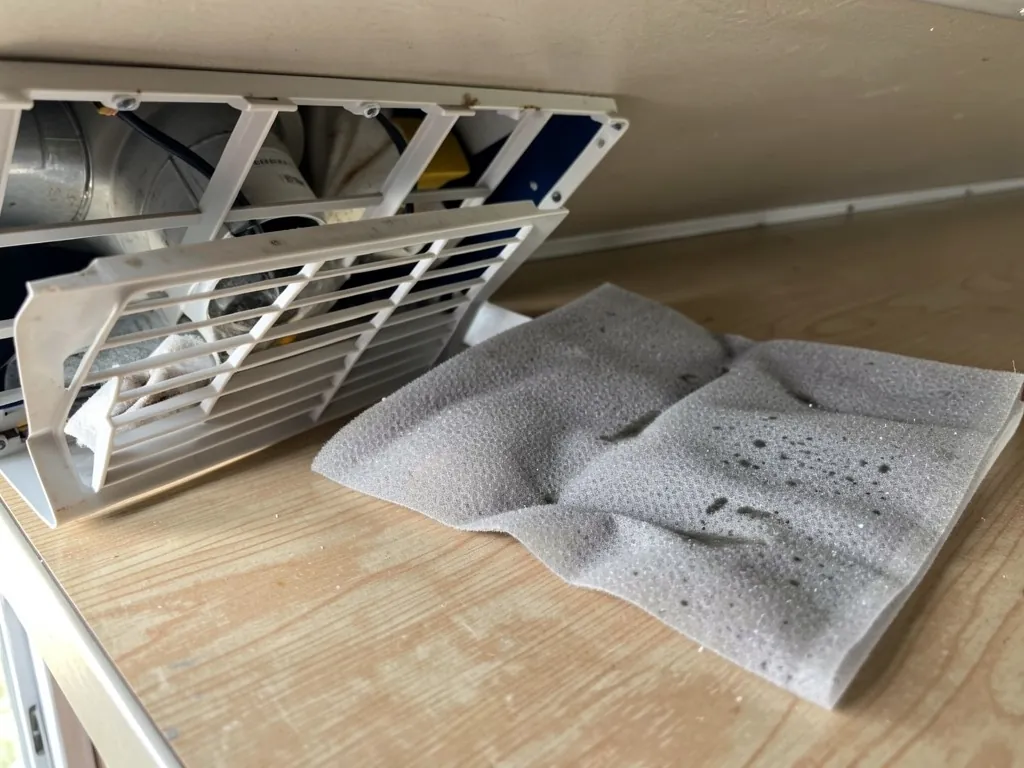
- FilterDrop the ceiling grille and pull out the foam pad behind it. Pollen clogs it in spring and summer leaves it damp. Wash, dry completely, refit.
- ThermostatCool mode, not Fan. Set the temperature well below the room. On very muggy days, Low or Auto fan pulls more water out of the air than High.
- Breakers and pedestalCheck the AC breaker in the coach panel and the one on the site's power post. The wall thermostat needs 12-volt power, so the AC may stay off when the house battery is flat.
- VoltageA surge protector with a display shows what happens as the compressor starts. Readings that sag at dinnertime point to the park's supply, not your unit.
- Drip under the roofWater inside after a storm can be rain getting past the roof gasket rather than condensate. Note whether it drips only when the AC runs.
What the technician does
The tech starts with the electrics: supply voltage at the post and at the rooftop unit, and how many amps the compressor pulls on start-up. Capacitor, fan motor and compressor are tested next, and the roof shroud comes off so the condenser coil can be cleaned.
In our climate they also look hard at water: they clear the drain pan and its outlets, check the gasket that seals the unit to the roof, and clean mold off the evaporator coil if it smells. Many Florida leaks blamed on the AC are a squashed gasket.
If the compressor can't start on a 30-amp pedestal or a portable generator, a soft-start kit lowers the surge. When the refrigerant side itself is dead, the next step is a quote for a replacement unit.
What it costs
| Repair | Typical range | Source |
|---|---|---|
| Run or start capacitor, replaced | $150–420 | Micro-Air, “How much does it cost to replace an RV AC unit”, June 2026; Camping World, “Mobile RV Repair Cost Guide”, July 2026 |
| Fan motor | $200–600 | Micro-Air, “How much does it cost to replace an RV AC unit”, June 2026 |
| New rooftop unit, installed | $800–2,500+ | Micro-Air, “How much does it cost to replace an RV AC unit”, June 2026 |
| Technician's hourly rate | $140–200 | Micro-Air, “How much does it cost to replace an RV AC unit”, June 2026; Camping World, “RV Furnace Repair Cost Guide”, October 2026 — labor rates stated in both |
2026 ranges for planning, not a quote. Your tech names the real price after seeing the RV.
National figures — no one publishes AC repair prices just for Tampa Bay that we could find. Most techs bill the trip and the diagnosis on their own lines, so get both figures up front.
Prices checked November 2026.
Brands on Florida roofs
You'll mostly find Dometic (Blizzard NXT, Brisk II or Penguin II) or Coleman Mach units from Airxcel, in 13,500 or 15,000 BTU sizes. Heat-pump models can warm the coach on a mild winter morning.
Dometic and Coleman both say a healthy unit cools the air by roughly 16–22°F between the return grille and the nearest vent, after about 15 minutes on Cool with the fan on High. In humid air the drop can sit at the low end, because part of the work goes into pulling out water.
More questions about RV AC
Why is my RV AC leaking water inside?
Usually a clogged drain in the unit's pan, or a roof gasket that has flattened over time. In Florida the AC removes a lot of water from the air, so a small problem shows up fast. Shut it off and have it checked before the ceiling soaks through.
Should the fan be on High or Low in humid weather?
For cooling quickly, High. For drying the air on a muggy day, Low or Auto — slower air over the coil gives up more of its water. Try both and watch a hygrometer.
Does an RV AC need a refrigerant top-up?
No. Rooftop units are sealed. Low refrigerant means a leak, and many techs replace the unit rather than open the system.
Is a dehumidifier worth it if the AC works?
When the RV sits closed up, yes — the AC only dries the air while it runs. Our water damage page has a humidity check that tells you where your reading stands.
Send a repair request
A phone number is enough — whichever tech accepts will ring you back.