RV furnace repair in Tampa Bay
An RV furnace in Florida may sit unused for nine months, then get switched on the night the first real cold front arrives. That's why searches for furnace repair here jump in January and almost vanish by March.
The tech comes to the RV — a campsite, your driveway or a storage lot.
Gas smell? Leave the RV right away and take everyone with you. If the cylinder valve is within safe reach, close it; then phone 911 from a distance.
What owners report
- Fan blows, air stays cold
The burner never lights. Low battery voltage, a sail switch that doesn't close, or no propane reaching the burner.
- Lights, then shuts off
The flame starts and dies. A dirty flame sensor, a weak gas supply or a limit switch tripping from blocked airflow.
- Nothing happens at all
No fan, no click: thermostat, fuse or the 12-volt supply.
- Burning smell on the first run
A little dust burning off is normal for a few minutes. Smoke, a strong smell or soot at the vent is not — shut it off.
What you can check
- ThermostatSet it to Heat and above room temperature. Some thermostats need fresh batteries.
- BatteryThe furnace fan needs a well-charged battery to spin fast enough for the burner to light. Plug in to shore power and try again.
- PropaneOpen the cylinder valve and light a stove burner to make sure gas is flowing.
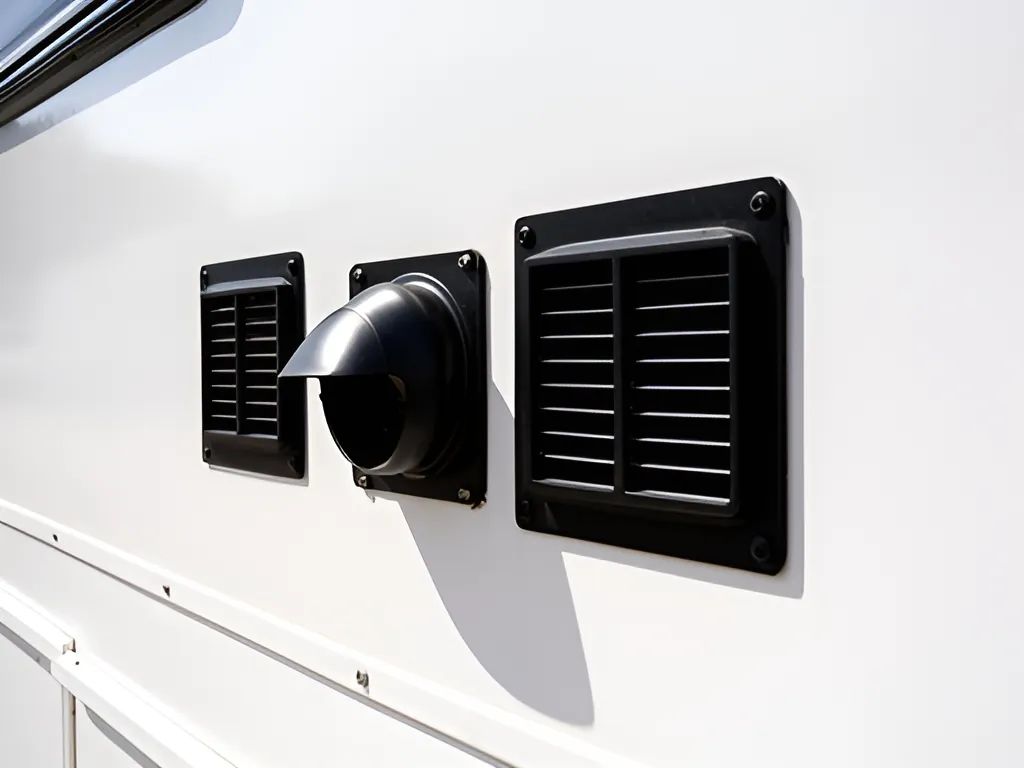
- Outside ventLook at the exhaust and intake. Wasps and mud daubers build nests there over the summer.
- Return airMake sure nothing blocks the return grille inside — the furnace shuts down if it can't breathe.
- CO alarmPress the test button and check the date on the back. An alarm past its date may stay silent.
What the technician does
The tech checks voltage under load, gas pressure, the sail switch, the limit switches and the igniter.
Burner and combustion chamber get a cleaning, nests come out of the vents, and the exhaust is checked for cracks.
On older Suburban and Atwood furnaces, the circuit board and the blower motor fail most. The tech tells you which one before replacing anything.
In Florida, servicing an RV's propane system — lines, the regulator, valves and gas appliances — is work for technicians licensed by the Florida Department of Agriculture and Consumer Services under Chapter 527 of the state statutes. Ask for the license number before gas work begins.
What it costs
| Repair | Typical range |
|---|---|
| Igniter replacement | $150–450 |
| Sail switch | $150–400 |
| Circuit board | $250–800 |
| Blower motor | $300–800 |
| Gas valve | $300–600 |
Source: Camping World, “RV Furnace Repair Cost Guide”, October 2026.
2026 ranges for planning, not a quote. Your tech names the real price after seeing the RV.
National figures. A clean and service before the first cold front costs far less than any of these.
Prices checked November 2026.
Furnace questions
Why does my furnace work on shore power but not on battery?
The fan runs slower on a weak battery, the sail switch doesn't close, and the burner never lights. Charge or replace the battery.
Can I use a space heater instead?
Many owners do on shore power. Keep it away from bedding and curtains, and don't run it on a crowded 30-amp circuit with the water heater element.
Should the furnace be serviced every year?
Once a year, before cool weather, is common advice. Here, November is a good time.
Send a repair request
A phone number is enough — whichever tech accepts will ring you back.